Differences between human and artificial intelligence
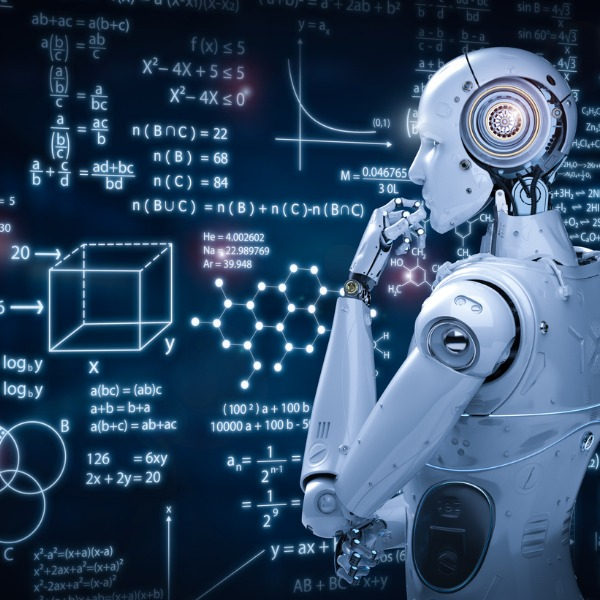
One way to understand AI is to compare it to human intelligence. In general, we consider human intelligence in terms of our ability to solve problems, set and achieve goals, analyze and reason through problems, communicate and collaborate with others, as well as an awareness of our own existence (consciousness).AI is the ability for machines to simulate and enhance human intelligence. Unlike humans, AI is still a rules-based system and does not need elements of emotions or consciousness to be useful.In their 2016 book, Artificial Intelligence: A Modern Approach, Stuart Russell and Peter Norvig define AI as “the designing and building of intelligent agents that receive precepts from the environment and take actions that affect that environment.”
Machine learning vs. artificial intelligence
Machine learning is a subset of artificial intelligence. AI is a broad category that covers many systems and algorithms.
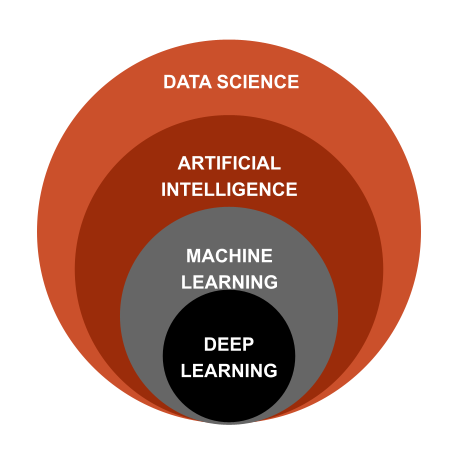
Both AI and ML can be considered subsets of data science, which is the application of the scientific method to extract insights from data to make decisions or predictions. For example, an investment banker might look at stock trends or other factors to figure out the best time to buy and sell securities. Additionally, a software engineer might develop a computer vision model to identify cars in images (as images are a form of data).As described earlier, AI is the development of algorithms and systems to simulate human intelligence. This can include automatically making decisions based on input data as well as systems that can learn over time.Machine learning, on the other hand, is the development of algorithms and systems that learn over time from data. Often, such algorithms include the development of mathematical and statistical models that have been trained on input data. These models are capable of extracting patterns from the input data to come up with rules that can make decisions and predictions.Deep learning, a term coined by computer scientist Rina Dechter in 1986, describes ML models that are more complex and can learn representations from the data in successive layers. Deep learning has been the most studied and hyped form of ML since 2010.